
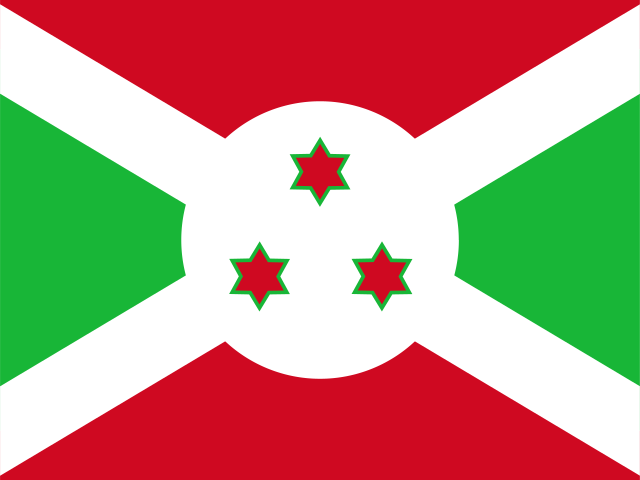
 How to Get Burundian Citizenship
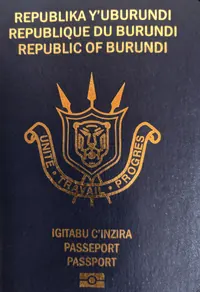
Key facts
- Residence for naturalisation
- 10 years
- Language
- Assimilation only
- Dual citizenship
- Accepted
- Civic test
- Required, no test specified
- Criminal record
- A criminal record or good character condition applies
- Income condition
- No income condition in the law
- Dual citizenship in detail
- Accepted in both directionsNew citizens do not have to give up their previous citizenship.Citizens who naturalise abroad keep their citizenship.
- Available routes
- Region
- Africa
- Law in force as of
- 1 January 2024
- Last checked
- 9 November 2026
The rule text in the sections below was coded for the law on 1 January 2024. A November 2026 search found no later change for this country.
Naturalisation (residence)
For foreign nationals living in Burundi, this is the ordinary route based on residence. Burundi allows authorities to refuse an application, even where conditions have been met.
- Residence
- 10 years
Person has been resident at least 10 years.
- Previous citizenship
- New citizens do not have to give up their previous citizenship
- Language
- General assimilation condition, no specific language rule
Attachment to the Burundian nation and assimilation with Burundian citizens required.
- Civic knowledge
- Required, no test specified
Attachment to the Burundian nation and assimilation with Burundian citizens required.
- Criminal record
- A criminal record or good character condition applies
Person is of good conduct, behaviour and customs, no convictions for crime or other offence.
- Income or economic resources
- No income condition in the law
Marriage or civil partnership
For spouses of citizens of Burundi, the rules below set out what this route requires.
Person is the wife of a Burundian citizen.
Person is the husband of a Burundian citizen and has been resident in Burundi for 5 years. Other conditions: see the rules for ordinary naturalisation.
Descent (citizen parent)
This route covers children of a citizen of Burundi, subject to the conditions below. No authority decides this matter, since citizenship follows directly from the law of Burundi.
Descent (born in country)
Person is the child of a citizen (constitution), or person is born in wedlock to a father who is a citizen, or is recognised by voluntary or court-ordered legitimation as the child of a Burundian father, or paternal descent is not established and the child is recognised voluntarily or by court order as the child of a Burundian mother, or the child is repudiated by the father and the mother is a citizen (law).
Descent (born abroad)
Constitution: person is the child of a citizen. Law: person is born in wedlock to a father who is a citizen, or is recognised by voluntary or court-ordered legitimation as the child of a Burundian father, or paternal descent is not established and the child is recognised voluntarily or by court order as the child of a Burundian mother, or the child is repudiated by the father and the mother is a citizen.
Child of a new citizen
A parent acquiring citizenship of Burundi is the basis of this route. Burundi allows authorities to refuse an application, even where conditions have been met.
Person is the child aged under 21 years of a person who is acquiring citizenship.
Adoption
This route covers people adopted by a citizen of Burundi, subject to the conditions below. Burundi requires an application, after which citizenship must be granted if conditions are fulfilled.
Minor child is the subject of full adoption by a citizen, provided that s/he resides in Burundi at the time of the adoption.
Other family members of citizens
A family tie to a citizen, former citizen or new citizen of Burundi is the basis of this route. No authority decides this matter, since citizenship follows directly from the law of Burundi.
Person is the child of a father who was a citizen on the date of death.
Former citizens (reacquisition)
Earlier citizenship of Burundi is the basis of this route. Burundi requires an application, after which citizenship must be granted if conditions are fulfilled.
Person was Burundian citizen from birth and lost it because s/he acquired another citizenship.
Stateless persons
For people without any citizenship, the rules below show what the law of Burundi provides. No authority decides this matter, since citizenship follows directly from the law of Burundi.
Person is born in Burundi of unknown parents, or found in Burundi as a child unless it is established that s/he was not born in Burundi.
Special achievements
This route covers people recognised for special achievements or for contributions to Burundi, subject to the conditions below. Burundi allows authorities to refuse an application, even where conditions have been met.
Person has been resident 5 years and has rendered exceptional services to Burundi. Other conditions: see the rules for ordinary naturalisation.
Not available in Burundi: Birth in the country, Citizens of specific countries, Ethnic or cultural affinity, Residence during childhood, Very long residence, Refugees, Public or military service, Investment. Based on the GLOBALCIT coding of the law, updated with in-force changes.
Dual citizenship
Burundi accepts dual citizenship in both directions.
- New citizens
- New citizens do not have to give up their previous citizenship
- Citizens who naturalise abroad
- Citizens who naturalise abroad keep their citizenship
Compare with neighbours
Under the law of Burundi, 10 years applies, in line with the usual requirement across Eastern Africa.
Compare Burundi with all countries in the residence ranking
| Country | Residence | Language | Dual citizenship |
|---|---|---|---|
 Comoros | 10 years | Assimilation only | Accepted |
 Djibouti | 10 years | Required, no test | Accepted |
 Mozambique | 10 years | Required, no test | Accepted |
 South Sudan | 10 years | None | Accepted |
 Uganda | 10 years | Test or certificate | Accepted |
 Zambia | 10 years | None | Accepted |
Sources
- Official source: migration.gov.bi: Migration Burundi
- Second source used for the cross-check: Wikipedia: Burundian nationality law
Naturalisation provisions: Nationality law: Art. 6, 7.
Cite this page
TravelDecla. (2026, November 9). How to Get Burundian Citizenship. https://traveldecla.com/citizenship/burundi/
<a href="https://traveldecla.com/citizenship/burundi/">How to Get Burundian Citizenship</a> (TravelDecla, last checked 9 November 2026)
Licence
Vink, van der Baaren, Bauböck, Džankić, Honohan, Manby (2025). GLOBALCIT Citizenship Law Dataset v3.1. Global Citizenship Observatory, https://hdl.handle.net/1814/73190. CC BY 4.0. Modified by TravelDecla.
Modified by TravelDecla: updated with changes after 1 January 2024.
GLOBALCIT codes the law as written. Fees, processing times, quotas and how officials apply the rules in practice are not in this dataset: check them with the official authority.
FAQ
How many years to become a Burundian citizen?
10 years of residence is required for ordinary naturalisation in Burundi, plus further conditions.
Does Burundi allow dual citizenship?
Yes. The law of Burundi accepts dual citizenship for new citizens and for citizens who naturalise abroad.
Do I need a language test for Burundian citizenship?
Instead of a language test, Burundian citizenship relies on a broader assimilation condition.
Is there a civic knowledge test for Burundian citizenship?
Applicants are expected to have civic knowledge, though Burundi sets out no particular test.
Do I have to give up my current citizenship to get Burundian citizenship?
Burundi does not require you to give up your current citizenship for Burundian citizenship. The law of your current country may have its own rules on this.
Can I get Burundian citizenship by marriage?
Yes, the law of Burundi has a route for spouses. Procedure: entitlement, discretionary.
Can I get Burundian citizenship by descent?
Yes. A child of a citizen can acquire citizenship of Burundi by descent. Procedure: automatic.
Can I get Burundian citizenship by investment?
No investment route is coded in the law of Burundi.
Related pages


Also see: Burundi passport, visa-free access and entry rules. Latest law changes.

Corrections to this page are handled by Sarah Kim, Fact-Checker.