
 How to Get Nepali Citizenship
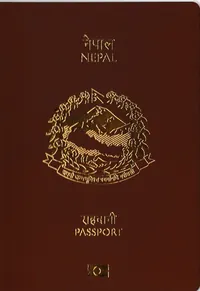
Key facts
- Residence for naturalisation
- No residence routeSources disagree: GLOBALCIT gives no fixed residence period; another reference cites 15 years under the Citizenship Act 2006.
- Language
- No route
- Dual citizenship
- Not accepted
- Civic test
- Not applicable: no residence-based route
- Criminal record
- Not applicable: no residence-based route
- Income condition
- Not applicable: no residence-based route
- Dual citizenship in detail
- Not acceptedCitizens who naturalise abroad lose their citizenship automatically.
- Available routes
- Region
- Asia
- Law in force as of
- 1 January 2024
- Last checked
- 9 November 2026
The rule text in the sections below was coded for the law on 1 January 2024. A November 2026 search found no later change for this country.
Marriage or civil partnership
This route covers people married to a citizen of Nepal, subject to the conditions below. An application is required, and citizenship must be granted once the legal conditions are met.
Person is the wife of a male citizen. Other conditions: proof of marriage relationship and renunciation of citizenship of another country.
Descent (citizen parent)
Descent from a citizen parent is the basis of this route in Nepal.
Descent (born in country)
Person is born in Nepal to a father who is a citizen, or to a mother who is a citizen and the father is untraceable.
Descent (born in country)
Person is born in Nepal to a mother who is a Nepali citizen and a non-citizen father, has permanently resided in Nepal and has not acquired citizenship of a foreign country.
Descent (born abroad)
Person is born abroad to a father who is a citizen, or to a mother who is a citizen and the father is untraceable.
Child of a new citizen
For children whose parent becomes a citizen of Nepal, the rules below set out what applies. Authorities retain discretion and may refuse an application even when the conditions are met.
Person is the child of someone who acquired citizenship under the rules for special achievements, and the child was born prior to the parent acquiring citizenship.
Former citizens (reacquisition)
For former citizens of Nepal, the rules below show when citizenship can be reacquired. An application is required, and citizenship must be granted once the legal conditions are met.
Person lost citizenship due to acquisition of citizenship of another country, returns to reside in Nepal, and shows evidence of having renounced his/her foreign citizenship.
Stateless persons
This route covers stateless people and children who would otherwise be stateless, subject to the conditions below. An application is required, and citizenship must be granted once the legal conditions are met.
Person is a child found in Nepal of unknown parentage.
Special achievements
Special achievements, or a national interest in granting citizenship, are the basis of this route in Nepal.
Person has been resident in Nepal for 15 years and has special merits in the fields of science, philosophy, art, literature, world peace, human welfare or Nepalese industry, finance or social welfare. Other conditions: good character, sound mind, able to read and write Nepali or any other language in practice in Nepal, engaged in an occupation and domiciled in Nepal, his/her country of origin allows Nepalese citizens to naturalise, renunciation of citizenship of another country, and oath of allegiance.
Person is granted honorary citizenship.
Not available in Nepal: Naturalisation (residence), Birth in the country, Adoption, Other family members of citizens, Citizens of specific countries, Ethnic or cultural affinity, Residence during childhood, Very long residence, Refugees, Public or military service, Investment. This follows the GLOBALCIT coding, with in-force changes applied.
Dual citizenship
Dual citizenship is coded as not accepted in Nepal, for new citizens and for citizens who naturalise abroad.
- New citizens
- Not applicable: no residence-based route
- Citizens who naturalise abroad
- Citizens who naturalise abroad lose their citizenship automatically
Person acquires citizenship of another country.
Compare with neighbours
Check where Nepal sits in the full residence ranking
| Country | Residence | Language | Dual citizenship |
|---|---|---|---|
 Afghanistan | 5 years | None | Accepted |
 Bangladesh | 5 years | None | Not accepted |
 Bhutan | 20 years | Required, no test | Not accepted |
 India | 11 years | Required, no test | Not accepted |
 Iran | 5 years | None | Accepted |
 Pakistan | 5 years | Required, no test | Not accepted |
Sources
- Official source: Ministry of Home Affairs: Citizenship by Descent
- Second source used for the cross-check: Wikipedia: Nepali nationality law
This page was located by search.
Cite this page
TravelDecla. (2026, November 9). How to Get Nepali Citizenship. https://traveldecla.com/citizenship/nepal/
<a href="https://traveldecla.com/citizenship/nepal/">How to Get Nepali Citizenship</a> (TravelDecla, last checked 9 November 2026)
Licence
Vink, van der Baaren, Bauböck, Džankić, Honohan, Manby (2025). GLOBALCIT Citizenship Law Dataset v3.1. Global Citizenship Observatory, https://hdl.handle.net/1814/73190. CC BY 4.0. Modified by TravelDecla.
Modified by TravelDecla: updated with changes after 1 January 2024.
GLOBALCIT codes the law as written. Fees, processing times, quotas and how officials apply the rules in practice are not in this dataset: check them with the official authority.
FAQ
How many years to become a Nepali citizen?
There is no ordinary naturalisation route in the law of Nepal, so residence alone does not lead to citizenship.
Does Nepal allow dual citizenship?
No. Nepal does not accept dual citizenship as a general rule, as coded in the data.
Do I need a language test for Nepali citizenship?
Nepal does not offer a path to citizenship through residence.
Is there a civic knowledge test for Nepali citizenship?
Nepal does not offer a residence-based path to naturalisation.
Do I have to give up my current citizenship to get Nepali citizenship?
Since no residence-based naturalisation route exists, this question does not apply to Nepali citizenship.
Can I get Nepali citizenship by marriage?
Yes. Marriage to a citizen is a route to citizenship in Nepal. Procedure: entitlement.
Can I get Nepali citizenship by descent?
Yes, Nepal has a descent route. Procedure: entitlement, discretionary.
Can I get Nepali citizenship by investment?
No. The data codes no citizenship-by-investment route for Nepal.
Related pages


Also see: Nepal passport, visa-free access and entry rules. Latest law changes.

Corrections to this page are handled by Sarah Kim, Fact-Checker.