
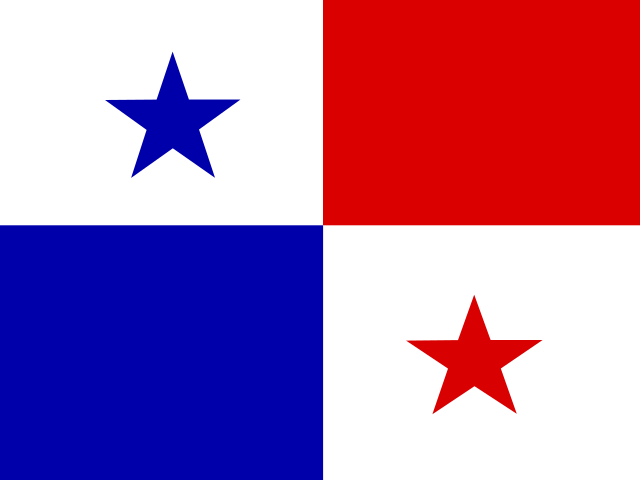
 How to Get Panamanian Citizenship
Key facts
- Residence for naturalisation
- 5 years
- Language
- Required, no test
- Dual citizenship
- Accepted
- Civic test
- Required, no test specified
- Criminal record
- A criminal record or good character condition applies
- Income condition
- No income condition in the law
- Dual citizenship in detail
- Accepted in both directionsThe law has a renunciation requirement, coded as nominal without apparent consequences.Only naturalised citizens lose their citizenship when they naturalise abroad.
- Available routes
- Region
- Americas
- Law in force as of
- 1 January 2024
- Last checked
- 9 November 2026
The rule text in the sections below was coded for the law on 1 January 2024. A November 2026 search found no later change for this country.
Naturalisation (residence)
Residence in Panama is the basis of this route, together with the other conditions below. Meeting the legal conditions does not guarantee approval, since authorities retain final discretion.
- Residence
- 5 years
Person has been resident in Panama for a continuous period of 5 years (time spent during minority is fully counted).
- Previous citizenship
- The law has a renunciation requirement, coded as nominal without apparent consequences
Oath of renunciation of citizenship of another country required (proof of renunciation is not required).
- Language
- Required, no test or certificate specified
Proficiency in Spanish.
- Civic knowledge
- Required, no test specified
Basic knowledge of the geography, history and political organization of Panama.
- Criminal record
- A criminal record or good character condition applies
Naturalisation can be denied for reasons of morality, safety, health, and physical or mental incapacity.
- Income or economic resources
- No income condition in the law
Marriage or civil partnership
Marriage to a citizen of Panama is the basis of this route, together with the conditions below. Meeting the legal conditions does not guarantee approval, since authorities retain final discretion.
Person is the spouse of a citizen and has been resident in Panama for 3 years uninterrupted. Other conditions: see the rules for ordinary naturalisation.
Descent (citizen parent)
For a person with a parent who is a citizen of Panama, the rules below set out how this route works.
Person is born abroad to a citizen by birth and establishes residence in Panama.
Person is born abroad to a citizen by naturalisation and establishes residence in Panama (by declaration within 1 year of reaching the age of majority).
Birth in the country
This route concerns people born in Panama, and only in the situations described below. Panama grants citizenship by operation of law, requiring no decision from any authority.
Person is born in Panama.
Adoption
For people adopted by citizens of Panama, the rules below set out what applies. Where the legal conditions are met, an application leads to a mandatory grant of citizenship.
Person is born abroad and adopted by Panamanian citizens before the age of 7.
Citizens of specific countries
For citizens of certain countries, the law of Panama sets separate rules, shown below. Meeting the legal conditions does not guarantee approval, since authorities retain final discretion.
Person is a citizen by birth of Spain or a Latin American country and fulfils the same conditions as required in those countries for the naturalisation of Panamanian citizens (reciprocity).
Stateless persons
Statelessness, or the risk of it, is the basis of this route in Panama. Panama grants citizenship by operation of law, requiring no decision from any authority.
Article 32 of the Executive Decree 10 of 16 January 2019 on the implementation Law 28 of 30 March 2011 approves the Convention relating to the Status of Statelessness of 1954 and establishes that in cases where a child is found in the territory of the Republic whose identity is unknown it will be presumed that he/she was born in the country and that his or her parents are citizens of Panama.
Not available in Panama: Child of a new citizen, Other family members of citizens, Former citizens (reacquisition), Ethnic or cultural affinity, Residence during childhood, Very long residence, Refugees, Special achievements, Public or military service, Investment. Coded by GLOBALCIT for 1 January 2024 and updated with in-force changes.
Dual citizenship
Both groups can hold a second citizenship under the law of Panama: new citizens, and citizens who naturalise abroad.
- New citizens
- The law has a renunciation requirement, coded as nominal without apparent consequences
- Citizens who naturalise abroad
- Only naturalised citizens lose their citizenship when they naturalise abroad
Person is a citizen by naturalisation and acquires citizenship of another country.
Compare with neighbours
Across Central America, the most common requirement is 5 years, and Panama sets the same period.
See how Panama compares with every country in the residence ranking
| Country | Residence | Language | Dual citizenship |
|---|---|---|---|
 Belize | 5 years | None | Accepted |
 Costa Rica | 7 years | Required, no test | Accepted |
 El Salvador | 5 years | None | Accepted |
 Guatemala | 5 years | Test or certificate | Accepted |
 Honduras | 3 years | None | Citizens abroad only |
 Nicaragua | 4 years | Test or certificate | Citizens abroad only |
Sources
- Official source: Panamá Digital: First registration as a naturalised citizen
- Second source used for the cross-check: Wikipedia: Panamanian nationality law
Naturalisation provisions: Legal basis: Constitution Art. 10(1), 12, PAN 1, 4, 8, Decree-Law No. 3 Nationality law Art. 22 February 2008 Title XIII.
Cite this page
TravelDecla. (2026, November 9). How to Get Panamanian Citizenship. https://traveldecla.com/citizenship/panama/
<a href="https://traveldecla.com/citizenship/panama/">How to Get Panamanian Citizenship</a> (TravelDecla, last checked 9 November 2026)
Licence
Vink, van der Baaren, Bauböck, Džankić, Honohan, Manby (2025). GLOBALCIT Citizenship Law Dataset v3.1. Global Citizenship Observatory, https://hdl.handle.net/1814/73190. CC BY 4.0. Modified by TravelDecla.
Modified by TravelDecla: updated with changes after 1 January 2024.
GLOBALCIT codes the law as written. Fees, processing times, quotas and how officials apply the rules in practice are not in this dataset: check them with the official authority.
FAQ
How many years to become a Panamanian citizen?
The residence period for ordinary naturalisation in Panama is 5 years. Other legal conditions also apply.
Does Panama allow dual citizenship?
Yes, in both directions: new citizens and citizens who naturalise abroad can hold another citizenship.
Do I need a language test for Panamanian citizenship?
Knowledge of the language is required, yet no formal test is defined.
Is there a civic knowledge test for Panamanian citizenship?
Demonstrating civic knowledge is necessary for Panamanian citizenship, yet no test format is specified.
Do I have to give up my current citizenship to get Panamanian citizenship?
Panama has a renunciation requirement in law, and the data classes it as nominal. In GLOBALCIT's wording: "nominal requirement without apparent consequences".
Can I get Panamanian citizenship by marriage?
Yes, Panama provides a marriage route. Procedure: discretionary.
Can I get Panamanian citizenship by descent?
Yes, the law of Panama provides citizenship by descent from a citizen parent. Procedure: automatic, entitlement.
Can I get Panamanian citizenship by investment?
The data shows no investment route for Panama.
Related pages


Also see: Panama passport, visa-free access and entry rules. Latest law changes.

Corrections to this page are handled by Sarah Kim, Fact-Checker.