
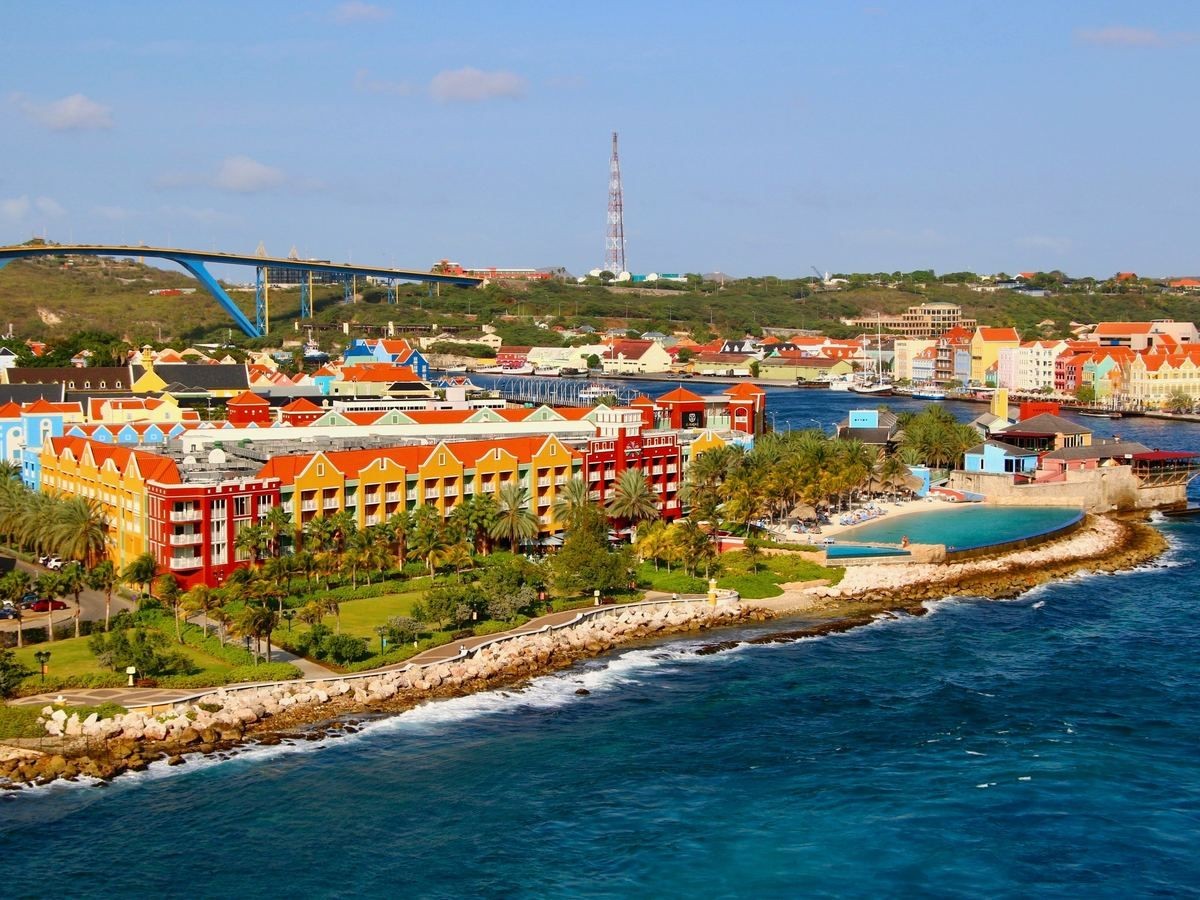
The requirement isn't new, but it has evolved: the DI Card replaced Curaçao's paper ED Card on October 1, 2019, and completing it now also unlocks a fast-track eGate lane at the airport for eligible travelers. Below, Venezuelan Citizens will find exactly who needs to complete the DI Card, when the 7-day submission window opens, and how to avoid the submission errors that trip up travelers most often.
Did you know? Venezuelan Citizens currently need a visa to enter Curaçao, a requirement introduced after years of visa-free travel between the two neighboring countries. The change hit tourism hard: Venezuelan arrivals fell roughly 63% between January–May 2025 and the same period in 2026, and Curaçao's government has said it's evaluating removing the visa requirement again. Curaçao Considering Visa-Free Entry for Venezuelans as Tourist Arrivals Plunge 63%, Curaçao Chronicle
| Quick facts for Venezuelan travelers | |
|---|---|
| DI Card | Mandatory, free, submit up to 7 days before departure |
| Visa to enter Curaçao | Currently required (exemptions for valid Schengen/US/UK/Canada/Ireland visas or residence permits), under active government review |
This is an independent guide, not an official government website. Below, you'll find everything Venezuelan citizens need to know about the Digital Immigration Card, plus how we can help you get it right.
Check requirementsOptional paid service. Official forms are free on government websites.What Is the Curaçao DI Card (and How It Relates to the Old ED Card)
If you've researched Curaçao entry requirements before, you may have seen two different names, DI Card and ED Card, and wondered if they're separate requirements. They're not. "DI Card" (Digital Immigration Card) is the current, official name for the form. "ED Card" (Embarkation-Disembarkation Card) is the legacy name, carried over from the paper form that used to be handed out on flights before the entire process moved online on October 1, 2019.
For Venezuelan Citizens, this means one thing: if a website, airline, or travel agent refers to the "ED Card," they're talking about the exact same digital requirement. There's no separate paper process to worry about, and there's no second form hiding behind a different name.
The DI Card itself is not a visa. It's a mandatory entry declaration, a way for Curaçao's immigration authorities to collect passport, flight, and accommodation details before a traveler arrives. It's completed for free at the official portal, dicardcuracao.com, and takes most travelers around 5–10 minutes.
Do Venezuelan Citizens Need a Visa for Curaçao?
This is the one place where Venezuelan Citizens' experience differs sharply from most other nationalities: as of this writing, Venezuelan Citizens currently need a visa to enter Curaçao. That wasn't always the case, Venezuelans traveled to Curaçao visa-free for years, given how close the two countries are, and the introduction of the visa requirement has been directly linked to a steep drop in Venezuelan tourism, with arrivals falling roughly 63% between January–May 2025 and the same period in 2026. Curaçao's government has publicly said it's evaluating removing the requirement again, so it's worth double-checking the current status close to your travel date rather than relying on older guides.
There is an exemption worth knowing about: if you hold a valid residence permit or a multiple-entry visa for the Schengen Area, Overseas France, the United Kingdom, Ireland, the United States, or Canada, you do not need a separate Curaçao visa. If none of those apply to you, you'll need to arrange a visa in advance through a Dutch embassy or consulate, the DI Card does not replace or substitute for it.
Here's the part that catches people off guard regardless of your visa situation: even once your visa question is settled, the DI Card is still required. There is no nationality that gets a pass on this one. The DI Card is a separate, non-negotiable step in your travel prep, on top of, not instead of, whatever visa process applies to you.
Who Must Complete the DI Card, and Who's Exempt
This is the single most misunderstood rule about the Curaçao DI Card, so it's worth stating clearly: the exemption is based on residency, not nationality.
That means:
- Every non-resident visitor must complete the DI Card, regardless of Venezuelan, age, or purpose of visit.
- Infants and children need their own individual DI Card. A parent or guardian can complete it on their behalf, but one form cannot cover an entire family.
- The only people exempt from the DI Card are legal residents of Curaçao.
This is where a common assumption trips people up: Dutch passport holders are not automatically exempt. Because Curaçao is part of the Dutch Caribbean, some travelers assume that holding a Dutch passport means skipping the DI Card altogether. It doesn't. Unless you are a registered resident of Curaçao itself, you'll need to complete the same DI Card as any other visitor, Dutch nationality alone does not grant an exemption.
For Venezuelan Citizens, the takeaway is simple: unless you live in Curaçao, plan to complete the DI Card, no exceptions.
The 7-Day Submission Window for Venezuelan Citizens
The DI Card can be submitted starting exactly 7 days before your departure date, not 7 days before arrival, but before you leave. That window gives Venezuelan Citizens some flexibility, but it also means submitting too early can be a mistake if your flight details aren't finalized yet.
Here's the timing that works best in practice:
- Earliest submission: 7 days before departure.
- Recommended submission: 24–48 hours before departure, once your flight is confirmed and check-in is complete.
- Why not submit too early: if your flight number, airline, or arrival date changes after submission, you'll need to log back in and update your DI Card. Submitting closer to departure, after your travel details are locked in, reduces the chance you'll need to make a correction.
Once submitted, you'll receive a PDF confirmation by email almost immediately. Keep it accessible, since some airlines check for it at the departure gate before boarding, not just at immigration on arrival in Curaçao.
How to Fill Out the DI Card Correctly
The DI Card itself is straightforward, but a few fields cause more errors than others. Here's what Venezuelan Citizens should have ready before starting.
Personal & Passport Information
- Full legal name, exactly as it appears on your passport, no nicknames or shortened versions
- Date of birth
- Nationality
- Passport number, country of issue, and expiry date
Double-check your passport number character by character. A single transposed digit is one of the most common reasons travelers have to resubmit.
Travel & Accommodation Information
- Flight number and airline
- Date of arrival in Curaçao
- Full accommodation address, either the complete hotel name and street address, or, if staying with a host, their full name, address, and contact phone number
- Intended length of stay, in nights (minimum 1, maximum 90 per visit)
- A valid email address, since your confirmation PDF will be sent there
Because you'll need a working email address to receive your confirmation, it's worth double-checking that field before you submit, a typo there means your confirmation goes nowhere.
Common DI Card Mistakes Venezuelan Citizens Make
A handful of errors account for most of the submission problems travelers run into. Watch for these:
- Name mismatches. Entering a nickname, maiden name, or shortened version of your name instead of exactly what's printed on your passport.
- One form for the whole family. The DI Card is per-person, not per-booking. Each traveler, including infants, needs their own individual submission, even if you're all on the same flight and staying at the same address.
- Using unofficial, fee-charging websites. The DI Card is completely free at the official portal, dicardcuracao.com. A number of third-party sites charge unsuspecting travelers for a form that costs nothing through the correct channel. Always verify you're on the official site before entering any passport or payment information.
- Assuming the old visa-free rule still applies. It doesn't, at least for now, Venezuelan Citizens currently need a visa to enter Curaçao, unlike the visa-free status Venezuelans had for years before. Double-check the current requirement close to your travel date, since Curaçao's government has publicly discussed reversing this policy.
Avoiding these three mistakes covers the vast majority of DI Card issues Venezuelan Citizens run into.
The Curaçao Express Pass: Skipping the Immigration Line
Once your DI Card is submitted, you may be eligible for a meaningful upgrade to your arrival experience: the Curaçao Express Pass. This fast-track option lets eligible travelers move through eGates at the airport instead of waiting in the standard immigration line.
A few things to know:
- The Express Pass is accessed through the Airside app, separate from the DI Card portal itself.
- It's only available after your DI Card has been completed, you can't apply for the Express Pass on its own.
- Eligibility has its own rules, generally tied to age, passport type (including having an embedded chip), and how far in advance your DI Card was submitted.
If you're eligible, this is one of the easiest ways to shorten your time at the airport after a long flight, but it starts with getting your DI Card submitted correctly and early enough to qualify.
What to Bring at Immigration in Curaçao
Even with your DI Card confirmed, immigration officers will typically expect to see a few supporting documents on arrival:
- Your valid passport (the same one used to complete the DI Card)
- Your DI Card confirmation, printed or shown digitally
- A return or onward ticket
- Proof of accommodation in Curaçao
- Proof of sufficient funds for your stay
Having these ready before you reach the immigration desk will make for a much smoother arrival.
More Curaçao DI Card Guides by Nationality
- Curaçao Digital Immigration Card (DI Card) for Colombian Citizens
- Curaçao Digital Immigration Card (DI Card) for Dutch Citizens
- Curaçao Digital Immigration Card (DI Card) for US Citizens
FAQ for Venezuelan Citizens
Is the DI Card the same as the ED Card?
Yes. "ED Card" is the older name for the same requirement, left over from the paper form used before October 2019. There's no separate process to complete.
Is the Curaçao DI Card free?
Yes, completely free at the official portal, dicardcuracao.com. Be cautious of third-party sites charging a fee for the same form.
Do Dutch passport holders need to complete it?
Yes. The DI Card exemption is based on Curaçao residency, not nationality, Dutch passport holders who aren't registered residents of Curaçao must complete the DI Card like any other visitor.
What happens if a flight changes after submission?
You can return to the DI Card portal and update your travel details, including flight number and arrival date, without starting the form over from scratch.
Do children need their own DI Card?
Yes. Every non-resident traveler, including infants, needs an individual DI Card. A parent or guardian completes it on their behalf, but it can't be combined into one family submission.
Do Venezuelan Citizens need a visa to enter Curaçao?
Currently, yes, unlike the other nationalities covered in this guide, Venezuelan Citizens need a visa to enter Curaçao. This wasn't always the case: Venezuelans traveled visa-free for years, and the requirement's introduction has been linked to a roughly 63% drop in Venezuelan arrivals. If you hold a valid residence permit or multiple-entry visa for the Schengen Area, Overseas France, the UK, Ireland, the US, or Canada, you're exempt from needing a separate Curaçao visa. Curaçao's government has said it's evaluating removing the requirement entirely, so it's worth confirming the current status close to your travel date. Either way, the DI Card is still required on top of whatever visa situation applies to you.